Brunei Versus Saudi Arabia Two Flags: A Comparative Analysis of National Symbolism and Design Utility
When evaluating national identity through the lens of graphic design, few pairings offer as stark a contrast in color theory, historical weight, and visual composition as Brunei Versus Saudi Arabia Two Flags. This specific conceptual illustration serves not merely as a decorative element but as a study in geopolitical aesthetics. For designers, researchers, and content creators seeking to understand the nuances of national symbolism, this comparison provides a rich framework for exploring how sovereign states communicate authority, heritage, and cultural values through their official emblems.
The concept of comparing these two distinct flags allows for a deeper appreciation of heraldic design principles. While both nations are located in Southeast Asia and the Middle East respectively, their flag designs reflect divergent historical trajectories and religious influences. The Brunei Versus Saudi Arabia Two Flags illustration captures this dichotomy, offering a high-fidelity representation that is essential for accurate visual communication in global contexts.
Visual Composition and Color Theory
The primary distinction between the flag of Brunei and the flag of Saudi Arabia lies in their use of color and geometric structure. Understanding these elements is crucial when utilizing assets like the Brunei Versus Saudi Arabia Two Flags concept illustration, where precise color reproduction is paramount.
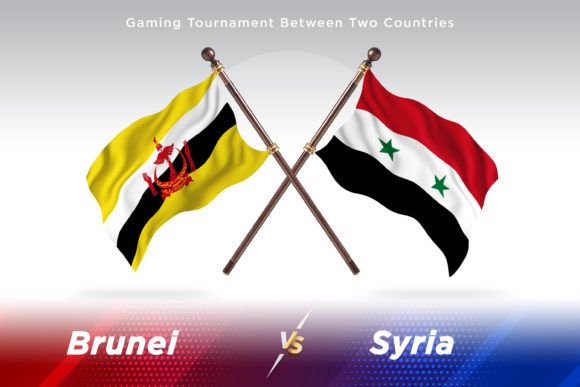
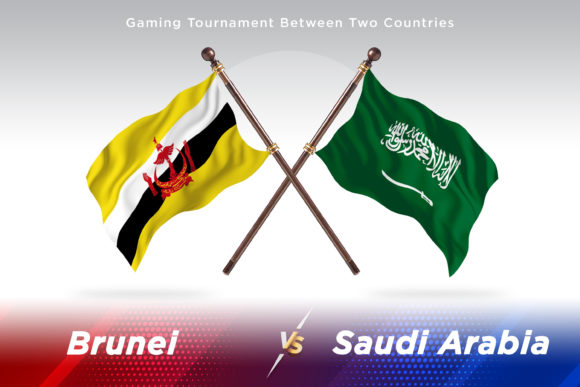
- Brunei Darussalam: The flag of Brunei is characterized by a vibrant yellow field, which traditionally represents the Sultan. It features diagonal stripes of black and white, symbolizing the chief ministers, and bears a red crest in the center containing national symbols such as an umbrella, wings, and hands. The overall effect is one of brightness and intricate detail, requiring careful rendering to maintain legibility at various scales.
- Saudi Arabia: In contrast, the flag of Saudi Arabia employs a deep green background, representing Islam, with white Thuluth script of the Shahada (Islamic creed) and a sword beneath it. The design is minimalist yet powerful, relying on typography and negative space rather than complex heraldic crests. The green hue is often associated with paradise and life in Islamic culture, making its accurate depiction vital for respectful representation.
When analyzing the Brunei Versus Saudi Arabia Two Flags illustration, one must note the dynamic "3D waving position" mentioned in the asset specifications. This adds a layer of realism that static images lack, allowing viewers to appreciate the flow of fabric and the interplay of light on the different textures implied by the designs. The yellow of Brunei pops against the darker, more solemn green of Saudi Arabia, creating a visually balanced composition that draws the eye across the entire frame.
Technical Specifications and Workflow Efficiency
For professionals in the design industry, the technical delivery of flag assets is just as important as their visual accuracy. The Brunei Versus Saudi Arabia Two Flags bundle is engineered to streamline workflows, particularly for those who need to integrate national symbols into larger projects without compromising quality or flexibility.
The inclusion of multiple file formats ensures compatibility across various platforms:
- PSD (4500 x 3000 px): The primary source file offers immense resolution, suitable for large-format printing or detailed digital displays. At this size, individual elements remain crisp, ensuring that fine details like the text on the Saudi flag or the small icons within the Bruneian crest are clearly visible.
- JPEG and PNG Outputs: These formats provide immediate usability for web and social media applications. The PNG version, likely featuring transparency or clean isolation, allows for easy compositing into other designs.
A critical feature of this asset is the use of smart objects. This allows designers to edit the design via smart objects, meaning they can swap out colors, adjust lighting, or modify specific elements non-destructively. This capability is particularly useful when adapting the Brunei Versus Saudi Arabia Two Flags concept for different thematic purposes, such as changing the background to match a corporate brand palette or adjusting the saturation for better contrast on dark mode interfaces.
Furthermore, the well-organized layers ensure that each flag is isolated on its own layer with the proper name. This structural integrity prevents accidental edits to adjacent elements and facilitates quick selection and manipulation. For teams working on collaborative projects, this organization reduces errors and speeds up the revision process significantly.
Contextual Applications and Use Cases
The utility of the Brunei Versus Saudi Arabia Two Flags illustration extends beyond simple decoration. Its versatility makes it applicable in several professional domains, each requiring a different approach to presentation and context.
Educational and Academic Resources
In educational settings, accurate visual aids are essential for teaching geography, history, and international relations. The high-resolution nature of the PSD file allows educators to zoom in on specific details during presentations, helping students identify the unique components of each flag. The realistic 3D waving effect adds engagement, making static lessons more dynamic. When discussing the political systems of Brunei and Saudi Arabia, having a visually striking representation of their national symbols helps anchor abstract concepts in tangible imagery.
Event Planning and Cultural Celebrations
Events that celebrate multiculturalism or diplomatic relations often require prominent display of national flags. Whether organizing a summit between ASEAN and GCC (Gulf Cooperation Council) members or hosting a cultural festival, the Brunei Versus Saudi Arabia Two Flags concept provides a ready-made, aesthetically pleasing backdrop. The isolated background illustration allows event planners to superimpose the flags onto stage designs, banners, or digital screens seamlessly. The ability to edit via smart objects means that logos of sponsoring organizations can be added without disrupting the integrity of the flag designs.
Digital Media and Journalism
Journalists and digital content creators frequently need to illustrate articles related to trade agreements, tourism, or political news involving these nations. The JPEG and PNG outputs offer optimized file sizes for web use while maintaining visual fidelity. The natural English descriptions and clear layer naming conventions make it easier for editors to manage assets in content management systems. By using the Brunei Versus Saudi Arabia Two Flags illustration, publishers can ensure that their visual content meets professional standards of accuracy and respect for national symbols.
Evaluating Tradeoffs and Alternatives
While the Brunei Versus Saudi Arabia Two Flags bundle offers significant advantages, it is important to consider potential limitations and alternatives depending on specific project needs.
Tradeoffs: The primary consideration is the fixed pairing of these two specific flags. If a project requires a broader range of Asian or Middle Eastern flags, users may find themselves needing additional assets. However, the provider’s offer to create custom flags upon request mitigates this limitation, allowing for scalable solutions. Another tradeoff involves the 3D waving style; while visually appealing, some minimalist design contexts might prefer flat, vector-based representations. In such cases, the ability to extract individual layers from the PSD allows for flattening or simplifying the design if needed.
Alternatives: For users seeking purely symbolic or abstract representations, generic flag icons or vector sets might be sufficient. These alternatives often come in bulk collections covering all countries, offering breadth over depth. However, they typically lack the artistic nuance, realistic lighting, and detailed heraldic accuracy found in the Brunei Versus Saudi Arabia Two Flags illustration. If the goal is to evoke a sense of grandeur, realism, or specific cultural resonance, the bespoke nature of this 3D illustration is superior to generic clip art.
Additionally, for projects requiring strict adherence to official flag codes without any artistic interpretation (such as legal documents), standard vector files provided by government sources might be more appropriate. The 3D waving position introduces artistic license that, while beautiful, deviates slightly from the flat, static definition of a flag. Therefore, the choice depends on whether the priority is artistic impact or regulatory precision.
Decision Factors for Selection
Selecting the right visual asset requires aligning technical capabilities with creative goals. The Brunei Versus Saudi Arabia Two Flags concept is best suited for projects that value:
- High Fidelity: Projects that demand crisp, high-resolution imagery for print or large-screen display.
- Customizability: Designs that require integration with other graphical elements, necessitating editable layers and smart objects.
- Realism: Contexts where a lifelike, three-dimensional representation enhances the narrative or aesthetic appeal.
- Specific Pairing: Scenarios where the direct comparison or co-presence of Brunei and Saudi Arabia is thematically relevant.
Conversely, readers may need another option if their project demands a vast library of flags, strict flat-design aesthetics, or budget constraints that preclude premium custom assets. In such cases, open-source vector repositories or standardized icon packs may serve as more practical alternatives.
Conclusion on Visual Impact
The Brunei Versus Saudi Arabia Two Flags concept illustration stands as a robust tool for professionals seeking to represent these two nations with dignity and visual excellence. By combining accurate heraldic details with modern 3D rendering techniques, it bridges the gap between traditional symbolism and contemporary design needs. Whether used for educational materials, event branding, or digital media, the asset’s structured layers, high resolution, and editable features provide the flexibility required in today’s fast-paced design environment. Ultimately, choosing this illustration reflects a commitment to quality, accuracy, and aesthetic sophistication in the portrayal of national identity.